
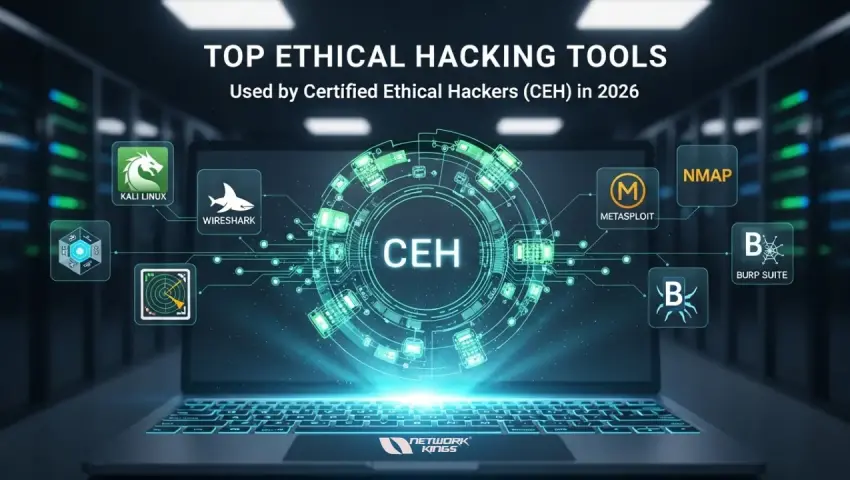
Top Ethical Hacking Tools You Must Use in 2026 (Vulnerability Scanners & Pentesting Guide)
-
 By Mrityunjay Singh
 - Mar 25, 2026
- 3 minutes read
- 236 Views
Cybersecurity in 2026 is moving at an insane pace. Vulnerabilities are discovered—and exploited—within hours, not weeks. Attackers are using automation and AI to scan, exploit, and breach systems faster than ever.
That’s why ethical hackers and security professionals must rely on powerful vulnerability scanners and penetration testing tools to stay ahead.
In this blog, we’ll explore the top ethical hacking tools in 2026, their real-world use cases, and why they are essential for modern cybersecurity.
Why Vulnerability Scanning is Critical in 2026
Modern systems are:
- Highly interconnected
- Cloud-based
- Continuously updated
👉 This creates constant exposure to:
- Zero-day vulnerabilities
- Misconfigurations
- Open ports and services
- Weak authentication mechanisms
Reality:
If you don’t find vulnerabilities first, attackers will.
What is Vulnerability Scanning & Pentesting?
- Vulnerability Scanning: Automated process to detect security weaknesses
- Penetration Testing (Pentesting): Simulating real-world attacks to exploit those weaknesses
👉 Together, they help organizations:
- Identify risks
- Fix security gaps
- Prevent real cyberattacks
Top Ethical Hacking Tools in 2026
1. Nmap – Network Discovery King
Nmap (Network Mapper) is one of the most powerful tools for scanning networks.
Key Features:
- Port scanning
- Service detection
- OS fingerprinting
- Network mapping
👉 Why it’s essential:
It’s the first step in reconnaissance for any ethical hacker.
2. Burp Suite – Web App Pentesting Standard
Burp Suite is widely used for testing web application security.
Key Features:
- Intercepting proxy
- Vulnerability scanner
- Intruder (automated attacks)
- Repeater for manual testing
👉 Why it stands out:
Perfect for finding XSS, SQL injection, authentication flaws.
3. Nessus – Professional Vulnerability Scanner
Nessus is a widely trusted tool for identifying vulnerabilities.
Key Features:
- Comprehensive vulnerability scanning
- Compliance checks
- Plugin-based architecture
- Risk prioritization
👉 Best for:
Enterprises and professional security audits.
4. OpenVAS – Free & Powerful Scanner
OpenVAS (Greenbone) is a strong open-source alternative to Nessus.
Key Features:
- Full vulnerability assessment
- Regular updates
- Open-source flexibility
- Network vulnerability scanning
👉 Why it’s popular:
Free yet highly effective for security testing.
Other Must-Have Ethical Hacking Tools (Bonus)
🔹 Metasploit
For exploitation and post-exploitation
🔹 Wireshark
For network traffic analysis
🔹 Nikto
For web server vulnerability scanning
🔹 SQLmap
For automated SQL injection testing
Real-World Use Case: How Hackers Exploit Faster in 2026
A typical modern attack looks like this:
- Scan network using Nmap
- Identify vulnerabilities using Nessus/OpenVAS
- Exploit web app via Burp Suite
- Gain access and escalate privileges
👉 Time taken: Hours, not days
That’s why continuous scanning is mandatory.
Key Trends in Ethical Hacking (2026)
🔹 AI-Assisted Pentesting
Automation is speeding up vulnerability discovery
🔹 Continuous Security Testing
Not yearly audits—real-time monitoring
🔹 Cloud Pentesting
Testing AWS, Azure, GCP environments
🔹 Bug Bounty Growth
More companies relying on ethical hackers
SEO Keywords Covered
- ethical hacking tools 2026
- vulnerability scanning tools
- penetration testing tools list
- best pentesting tools
- Nmap Burp Suite Nessus OpenVAS
- cybersecurity tools for hackers
- vulnerability assessment tools
Best Practices for Using These Tools
- Always get proper authorization before testing
- Combine automated tools with manual testing
- Regularly update tools and databases
- Focus on risk prioritization
- Document findings properly
Challenges in Vulnerability Scanning
- False positives
- Tool complexity
- Large attack surface
- Skill gap in cybersecurity
👉 Solution: Combine tools + human expertise.
Final Thoughts
In 2026, cybersecurity is a race against time.
Attackers are faster, smarter, and more automated.
👉 To defend systems effectively, you must:
- Scan continuously
- Test aggressively
- Fix vulnerabilities quickly
Because in today’s world:
The first one to find the vulnerability wins.
Mrityunjay Singh
Leave a comment
Your email address will not be published. Required fields are marked *