
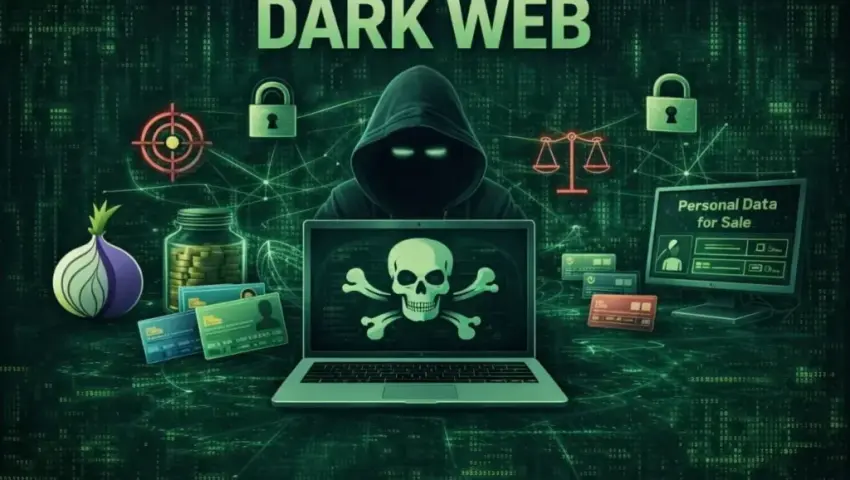
Dark Web Explained: How Cybercriminals Use It (Complete Guide 2026)
-
 By Mrityunjay Singh
 - BLOGS
- Mar 17, 2026
- 4 minutes read
- 108 Views
The internet is much larger than what we see through search engines like Google. Most people only access a small part of the internet known as the surface web. Beneath it lies the deep web and an even more hidden section called the dark web.
The dark web is often associated with anonymity, privacy, and unfortunately, cybercrime. In this guide, we will explain what the dark web is, how it works, and how cybercriminals use it, along with important safety information.
What is the Dark Web?
The dark web is a part of the internet that is not indexed by traditional search engines. It requires special software, configurations, or authorization to access.
Unlike normal websites, dark web sites use special domains such as:
These websites can only be accessed through privacy-focused networks that hide the user's identity and location.
The dark web is often used for anonymous communication, privacy protection, and secure information sharing, but it is also exploited by criminals.
Difference Between Surface Web, Deep Web, and Dark Web
Understanding the structure of the internet helps explain where the dark web fits.
Surface Web
This is the part of the internet that everyone uses daily.
Examples include:
News websites
Blogs
Social media platforms
Online stores
Search engines like Google and Bing can index these pages.
Deep Web
The deep web includes web pages that are not indexed by search engines.
Examples include:
Online banking portals
Private company databases
Academic research databases
Password-protected websites
Most of the internet actually exists in the deep web.
Dark Web
The dark web is a small hidden section of the deep web designed for anonymity.
Access usually requires specialized software that routes internet traffic through multiple encrypted layers to hide the user’s identity.
How the Dark Web Works
Dark web networks use special technologies to hide user identity and location.
The most common system used to access the dark web is the Tor network.
Tor works by sending internet traffic through multiple encrypted servers around the world. This process is often called onion routing, where data is wrapped in multiple layers of encryption.
Each server removes one encryption layer before passing the data to the next server. This makes it extremely difficult to track the original source of the connection.
Because of this anonymity, both privacy advocates and cybercriminals use the dark web.
How Cybercriminals Use the Dark Web
While the dark web has legitimate uses, it has also become a hub for illegal online activities. Cybercriminals often use the dark web to avoid detection and law enforcement tracking.
Below are some common ways criminals use the dark web.
1. Selling Stolen Data
One of the most common dark web activities is selling stolen personal data.
Hackers often sell information such as:
Email accounts
Password databases
Credit card numbers
Social media accounts
Government IDs
This information is usually obtained through data breaches and hacking attacks.
2. Malware and Hacking Tools
Cybercriminals also sell malware and hacking tools on dark web marketplaces.
Examples include:
Ransomware kits
Spyware software
Keyloggers
Phishing kits
Even people with limited technical knowledge can purchase these tools and launch cyber attacks.
3. Illegal Online Marketplaces
Dark web marketplaces function similarly to e-commerce websites but sell illegal goods and services.
These marketplaces may offer:
Stolen financial information
Counterfeit documents
Illegal digital services
Hacking services
Payments are often made using cryptocurrencies to maintain anonymity.
4. Cybercrime Services (Crime-as-a-Service)
Another growing trend is Cybercrime-as-a-Service (CaaS).
In this model, experienced hackers provide services such as:
Website hacking
DDoS attacks
Data theft
Account takeovers
Customers simply pay for the service, making cybercrime accessible to non-experts.
5. Data Leak Forums
Cybercriminals frequently publish stolen databases and leaked company information on dark web forums.
These leaks may contain:
User login credentials
Corporate emails
Confidential business documents
Such leaks can cause serious damage to organizations and individuals.
Is the Dark Web Always Illegal?
No, the dark web itself is not illegal. It is simply a technology that provides anonymity.
Some legitimate uses include:
Journalists communicating with confidential sources
Activists avoiding censorship
Privacy-focused communication
Secure research environments
However, illegal activities on the dark web are what give it a negative reputation.
Risks of the Dark Web
Accessing the dark web can be risky because many sites may contain harmful content or malicious software.
Common risks include:
Malware infections
Scams and fraud
Identity theft
Exposure to illegal content
For this reason, cybersecurity experts recommend extreme caution when interacting with unknown dark web services.
How to Stay Safe Online
Whether browsing the normal web or the dark web, practicing good cybersecurity habits is essential.
Important safety tips include:
Use strong and unique passwords
Enable two-factor authentication
Avoid clicking suspicious links
Keep your operating system updated
Use reliable antivirus protection
Being aware of cyber threats is one of the best ways to protect yourself online.
Conclusion
The dark web is a hidden part of the internet that provides anonymity and privacy. While it has legitimate uses, it is also commonly used by cybercriminals for illegal activities such as selling stolen data, distributing malware, and offering hacking services.
Understanding how the dark web works helps individuals and organizations better prepare for potential cyber threats. By following strong cybersecurity practices, users can significantly reduce their risk of becoming victims of cybercrime.
As the digital world continues to grow, awareness and education about online security will remain essential for everyone.
Mrityunjay Singh
Leave a comment
Your email address will not be published. Required fields are marked *