
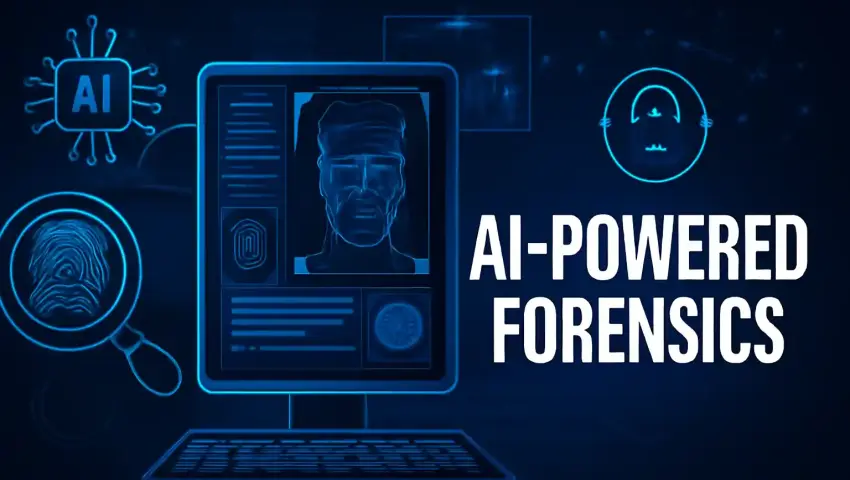
AI-Powered Digital Forensics: The Future of Crime Investigation
-
 By Mrityunjay Singh
 - BLOGS
- Mar 28, 2026
- 3 minutes read
- 110 Views
As cybercrime becomes more advanced, traditional investigation methods are struggling to keep up. With massive amounts of digital data generated every second, analyzing evidence manually is no longer efficient.
Artificial Intelligence (AI) is transforming how law enforcement agencies:
- Detect cyber threats
- Analyze digital evidence
- Identify suspects faster
- Solve complex crimes
In this complete guide, you’ll learn how AI is revolutionizing forensic investigations and what the future holds.
What is AI-Powered Digital Forensics?
AI-powered digital forensics is the use of:
- Machine Learning (ML)
- Artificial Intelligence (AI)
- Automation tools
to analyze and process digital evidence faster and more accurately.
👉 Instead of manually searching through data, AI can:
- Detect patterns
- Identify anomalies
- Automate repetitive tasks
Why AI is Needed in Modern Investigations
The Problem:
- Massive data (TBs of logs, files, chats)
- Complex cyber attacks
- Time-sensitive investigations
The Solution:
AI helps by:
- Reducing investigation time
- Improving accuracy
- Handling large-scale data
💡 Example: Instead of analyzing 1 million files manually, AI can filter relevant evidence in minutes.
Key AI Technologies Used in Digital Forensics


1. Machine Learning (ML)
- Learns from past data
- Detects suspicious patterns
- Identifies malware and threats
2. Natural Language Processing (NLP)
- Analyzes emails, chats, documents
- Detects threats, fraud, or intent
- Useful in scam and fraud cases
3. Image & Video Analysis
- Facial recognition
- Object detection
- Deepfake identification
4. Predictive Analytics
- Predicts potential cyber attacks
- Identifies high-risk users or activities
How AI is Used in Cyber Forensic Investigations
1. Automated Evidence Collection
- AI scans devices and cloud systems
- Identifies relevant data automatically
2. Smart Data Filtering
- Removes irrelevant files
- Highlights suspicious content
3. Pattern Recognition
- Detects unusual behavior
- Identifies hacking patterns
4. Timeline Reconstruction
- Automatically builds event timelines
- Tracks user activity
5. Malware Detection
- Identifies unknown threats using behavior analysis
- Detects zero-day attacks
AI in Mobile & Social Media Forensics


AI helps analyze:
- WhatsApp chats
- Social media messages
- Call logs
- Multimedia files
👉 It can detect:
- Fraud patterns
- Suspicious conversations
- Hidden relationships
AI in Network & Dark Web Investigations
- Detects unusual network traffic
- Monitors dark web activities
- Identifies cybercriminal groups
💡 AI can scan thousands of dark web pages instantly.
Real-World Use Case
Scenario:
A large-scale phishing scam targeting thousands of users.
Investigation:
- AI scans email databases
- Detects similar phishing patterns
- Identifies sender behavior
Result:
- Fraud network identified
- Attack stopped quickly
💡 AI reduced investigation time from weeks to hours.
Advantages of AI in Digital Forensics
Benefits:
- Faster investigations
- High accuracy
- Handles big data efficiently
- Detects hidden patterns
- Automation of repetitive tasks
Challenges & Limitations
Issues:
- Bias in AI models
- High implementation cost
- Requires skilled professionals
- Legal and privacy concerns
👉 AI must be used carefully in legal investigations.
Legal & Ethical Considerations
- Data privacy laws (GDPR, IT laws)
- Ethical use of AI
- Transparency in AI decisions
- Admissibility in court
👉 Courts may require explanation of how AI reached conclusions.
Future of AI in Digital Forensics (2026 & Beyond)
- Fully automated investigations
- AI-powered cybercrime prediction
- Integration with blockchain analysis
- AI in cloud forensics
- Real-time global threat detection
👉 AI will become the backbone of cyber investigations.
Conclusion
AI-powered digital forensics is revolutionizing crime investigation. By combining speed, accuracy, and automation, AI enables law enforcement agencies to tackle modern cyber threats effectively.
Mrityunjay Singh
Leave a comment
Your email address will not be published. Required fields are marked *